
Seven of my eight great-grandparents immigrated as kids or teenagers from Lithuania to the United States in the 1890s. My eighth, Grandma Pat1 in Wheaton (my mother’s maternal grandmother), was born shortly after her family arrived.
They all grew up in close-knit Lithuanian communities in the Chicagoland area. My mom’s paternal grandma, Grandma Pat in Cicero, spoke almost no English her entire life. While no longer in Lithuania, they lived in the next best thing. All of my grandparents could speak Lithuanian with variable fluency. (For his entire life, my Grandpa corresponded with “relatives in Lithuania.” I have never been sure if they were actually long lost cousins or just random people wanting money.)

My dad then grew up in Marquette Park, a strongly Lithuanian neighborhood on Chicago’s South Side, and my mom in the western suburbs of Chicago (appropriate given that my Grandpa was a land developer). Neither learned much Lithuanian. (My personal hypothesis: cultural pressure at the height of the Cold War to not teach your kids languages associated with the Soviet Union.)
My parents had me in the early 1990s while living in Beverly (a traditionally Irish South Side neighborhood), and we moved down outside Peoria in 1994. Downstate Illinois has never had many Lithuanians (aside from the podiatrist I saw in middle school who had Lithuanian flags outside each exam room door).
So, three generations after arriving off the boat, saying I am “100% Lithuanian” is a fun tidbit but otherwise fairly insignificant in my life. (I’ve grated potatoes to make “kugelis” plenty of times and had beet soup aplenty, but I’ve never made either on my own from start to finish.) Both mainstream American culture (like the angst pervasive in mid-2000s music) and growing up in a small town in the rural Midwest have shaped my outlook far more than anything uniquely Lithuanian.
Talking with my friends who are both the children of immigrants and now new parents themselves, they describe a similar pattern occurring in real time: their parents are different from family or friends who didn’t immigrate; they are different from their parents; and their kids are already different from themselves.
Moving somewhere new results in both mainstream integration and also maintenance of some peripheral culture. If enough people from a peripheral culture go somewhere new, their homeland’s culture can greatly influence the mainstream’s culture.
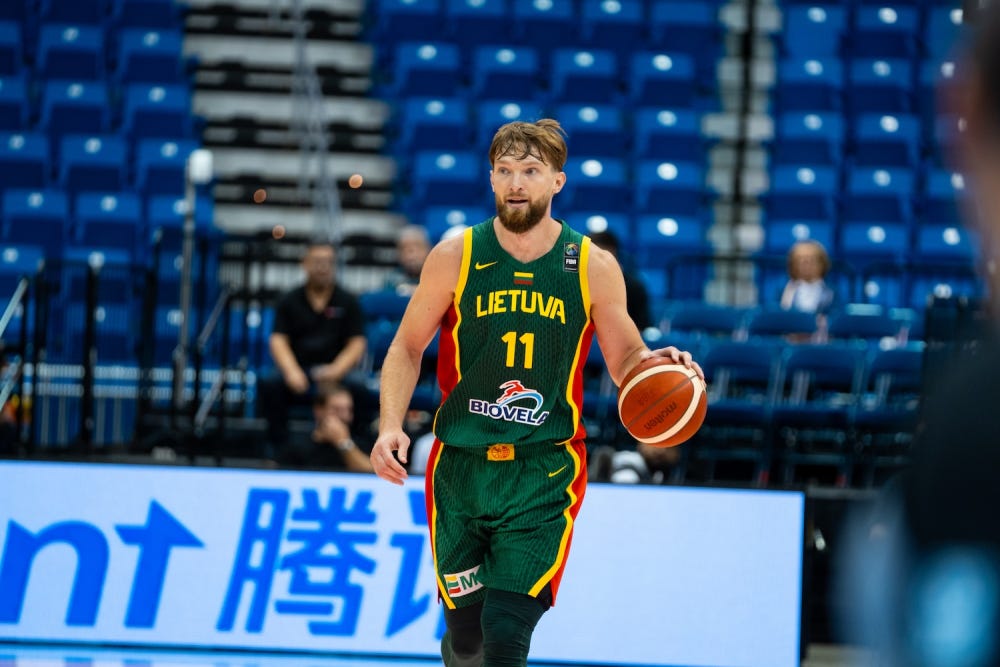
As a country of just under three million people, Lithuanian culture never generated broad change in American mainstream culture. Perhaps its greatest influence has been on American basketball: Lithuania has one of the highest rates of producing NBA players on a per capita basis. And not just players but game changers. A recent example? Domantas Sabonis (the Sacramento Kings forward, Lithuanian national team member, and son of NBA great Arvydas Sabonis), recently featured on Netflix’s first season of Starting 5 alongside LeBron James, Jimmy Butler, Anthony Edwards, and Jayson Tatum.
But immigrants from other countries certainly have influenced mainstream American culture. Given our close proximity to Mexico and other Latin America countries, Hispanic culture has influenced American culture far more than Lithuanian culture.
In the last days of summer 2000, I recall driving back and forth (about 40 minutes each way) to the 4-H County Fair. (In support of my small town bonafides, I participated in 4-H for many years, but as I did not grow up on a farm, I never showed livestock.) The most popular song (on a cassette) in my mom’s mini van? Bailamos by Enrique Iglesias.
Originally from Spain (not Latin America) and then growing up in Miami, Iglesias first released three Spanish language albums. Bailamos was one of his first singles primarily in English (but included on a limited edition version his 1998 Spanish album Cosas del Amor). After Will Smith heard the song at a concert, he requested its inclusion on the soundtrack for his movie Wild Wild West, the top box office opener for the 1999 4th of July weekend. The movie later went on to win five Razzies, but it launched Bailamos into the American consciousness, spending two weeks at the top of the “US Billboard Hot 100.” Bailamos anchored Iglesais’s first English album Enrique (released in November 1999) and drove his breakthrough with English speaking audiences (including my family in our mini van driving down some back country roads). Ultimately, Iglesias went on to earn the honorific “King of Latin Pop” and the “Top Latin Artist of All Time” award from Billboard in 2020.
Flash forward another two decades, the global leader in Spotify streams for the years 2020, 2021, 2022, and 2025 was… Bad Bunny. (Who did he lose to in 2023 and 2024? Taylor Swift in the middle of her generation defining Eras Tour. She also holds the title of most streamed artist ever on Spotify.)
If you told anyone in 2000 one of the most listened to performers worldwide (and the halftime show performer for Super Bowl LX) would be a Latin trap artist from Puerto Rico who performs entirely in Spanish, would they have believed you?
I’m guessing… no.
In his 2017 book Hit Makers, Derek Thompson describes the concept of “Most Advanced, Yet Acceptable” (MAYA). Essentially, people want novelty but also want it to still feel familiar. They are simultaneously neophilic and neophobic. Most cultures reject something that is too different or “other,” but they’ll often accept the slow incorporation of “other” into their mainstream.
So, Bad Bunny’s success depended not only his immense personal talent, but also on technological changes and on the success of Latin artists before him.
When music came on records and cassettes, record labels often lied about their sales, artificially increasing the chart performances of genres such as rock-and-roll. In the early 1990s, Billboard switched to using point-of-sale data and radio play counts to rank songs (big leaps in technology). By doing so, hip-hop and country music skyrocketed on the charts. While likely as popular for many years prior, just simply unrecognized by the chart, hip-hop and rap permeated more and more genres of music from there on out.
Around that same time, multiple Latin artists crossed over to US mainstream audiences.
Let’s consider Enrique Iglesias again. Prior to the mainstream success of Bailamos, he was not an unknown. His first three Spanish language albums each received Grammy nominations in the “Best Latin Pop Performance” category, with his debut album, Enrique Iglesias, winning in 1997. But what influenced Will Smith to push for the inclusion of Bailamos on his movie’s soundtrack? It was the sustained screaming and reaction of the fans present at the concert in Los Angeles, a city feeling the impact of Latin culture earlier than the US as a whole. According to the 2000 US census, 46.5% of the population of the City of Los Angeles was Hispanic or Latino (of any race) compared to 12.5% of the entire US.
Jennifer Lopez began a dancing and acting career in 1989 and was already a recognized star when she made her music debut in 1999 with her album On the 6, a predominately English language album (despite JLo’s initial wishes to make a Spanish language album) and performed at the 1999 FIFA Women’s World Cup closing ceremony, watched by over one billion people world wide. JLo would go on to continue captivating audiences and tabloids all over the world.
Another artist familiar to the FIFA World Cup fans is Shakira, the Columbian singer. By the time she released her first crossover, English language album Laundry Service2 in 2001, Shakira was a world-touring success and Grammy Award winner, having won for her first live album MTV Unplugged. (For those too young to remember, MTV defined music in the 1990s and 2000s. And Shakira was the first ever Spanish language performer on MTV Unplugged.) Her star would only grow bigger and bigger, and later albums featured songs in both English and Spanish.
It’d be impossible to note every Latin artist pre-BB who impacted mainstream American culture. But other notable ones3 include Daddy Yankee, the “King of Reggaeton,” whose 2004 song Gasolina many credit with introducing Reggaeton to the world. The music video premiered on MTV’s Total Request Live (again, the influence of MTV on broader music culture), and in 2023 the Library of Congress included it in the National Recording Registry for its cultural impact.
Another Daddy Yankee song (with Luis Fonsi) to breakthrough to the mainstream? Despacito, especially after Justin Bieber participated in a remix4, sending the song to sixteen weeks atop the Billboard Hot 100 and making it the most streamed song ever at that time.
Which brings us back to technological change, and not just point-of-sales data to more accurately determine chart performance. Social media, video sharing, and streaming all changed the landscape of music stardom.
Starting with social media sites such as MySpace and video platforms like YouTube then progressing to today’s popular platforms of Instagram and TikTok, social media and video sharing platforms have greatly reduced the power of gatekeepers of old (e.g. record labels, magazine writers, radio stations, etc.). Now, chance findings and algorithms could take an artist from unknown to super star. Being featured in a viral reel or TikTok could do the same.
Likewise, the internet advanced from downloaded music legally on platforms such as iTunes and illegally on sites such as Napster (prompting the well known Pepsi give-away campaign and 2004 Super Bowl commercial featuring Green Day’s cover of “I Fought the Law”) to streaming on Spotify or Apple Music. Now, listeners could search for and listen to nearly any song.
With the availability of countless genres, the mixing of musical styles and cultures has never been greater. But that mixing has always been needed, even before modern tech assistance.
Cultures are living, growing things. They’re rarely static. Different social ecosystems create various cultures, and then as they interact with one another, they adapt small pieces of the others. Culture grows by having generative ecosystems that remain distinct, yet porous.
What does any of that mean for Bad Bunny and Latin trap? Reggaeton heavily influenced Latin trap. It has origins in Jamaican workers going to Panama in the 1980s and translating dancehall music into Spanish, creating “reggae en español.” Puerto Ricans absorbed both original dancehall music and reggae en español by the 1990s. At that same time, hip-hop music spread from the mainland of the United States to Puerto Rico, where local artists began incorporating rap into reggae en español. Continued influence of these distinct places upon one another ultimately result in Latin trap music developed and popularized further by Bad Bunny.
While working at a supermarket in 2016, Bad Bunny released the song “Diles” on the streaming service SoundCloud, catching the attention of Puerto Rican producer DJ Luian. A 2017 collaboration with Karol G gave him his first top 10 hit on the Billboard Hot Latin Songs chart. His growing popularity then lead to collaborations with well known rappers like Cardi B and Drake and a 2020 appearance in the Super Bowl LIV halftime show headlined by none other than… JLo and Shakira5.
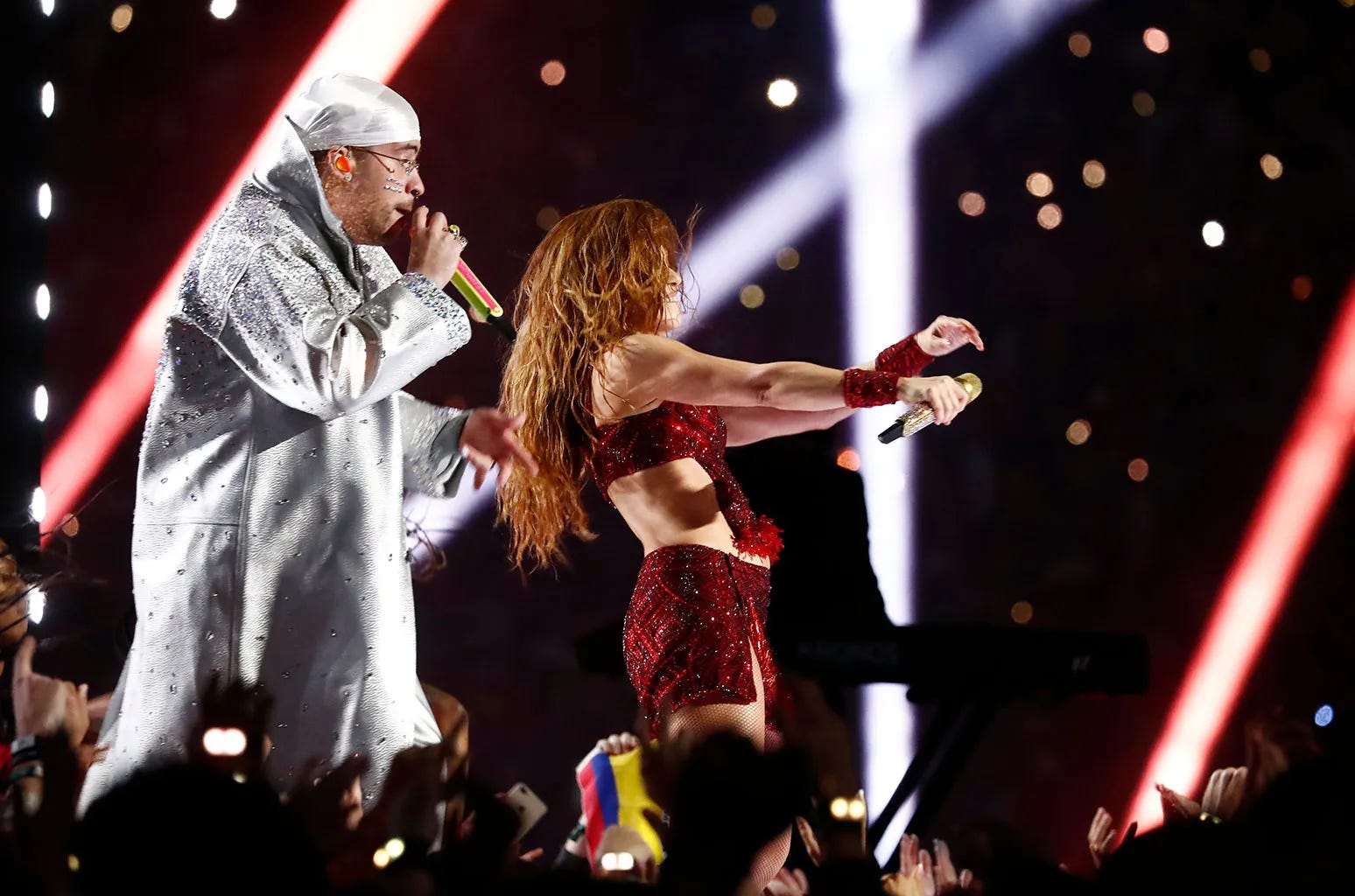
(It’s a great show, and I encourage watching the whole thing. But if you want to see Bad Bunny, start at 3:20. The NFL blocked it from being embedded outside of YouTube…)
Now, what does any of that have to do with business outside of the evolution in social media and streaming services? Quite a bit actually.
As noted before: cultural renewal occurs because of MAYA. The mainstream slowly adopts bits and pieces from the periphery and renews itself by incorporating a variation of it. Rarely does it wholesale adopt the culture of somewhere else. This renewal happens in parallel with other technologic or economic changes.
Without the periphery, that renewal slows greatly. A world without a large number of diverse cultures is similar to evolution in a time of low biodiversity. Biodiversity’s great benefit is a reservoir of genes which may not be adaptive in today’s conditions, but they may be crucial to a species’ survival when the world around it changes. Or, it is like a poorly diversified investment portfolio (investing’s only “free lunch”). Any individual security may do well or poorly. We’d all love to have been early investors in Amazon, but few market analysts succeed at making picks like that, at beating the returns from of a fully diversified portfolio at the efficient frontier.
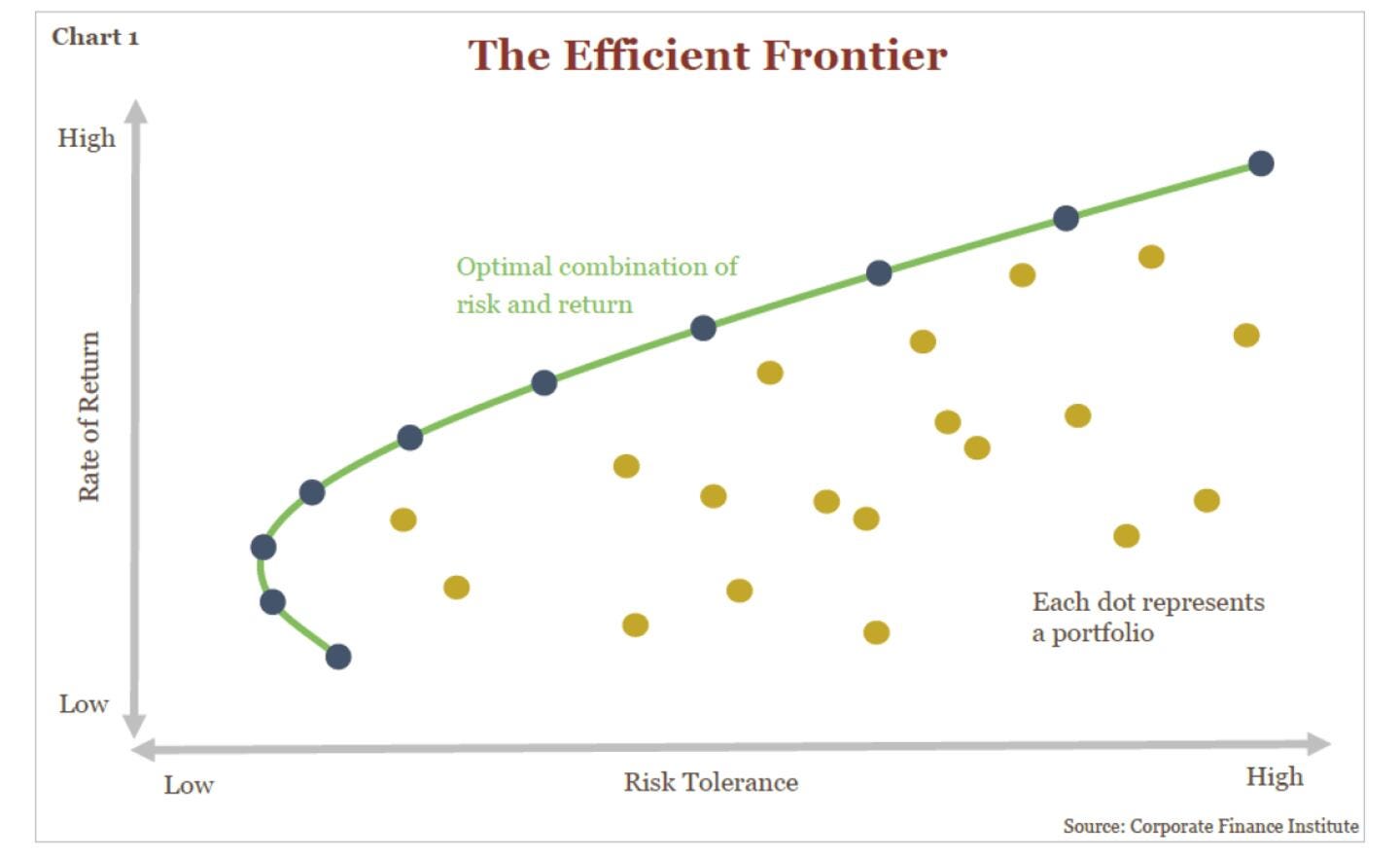
Likewise, maintaining many distinct cultures and allowing people from them to authentically interact with one another preserves the reserve of possible cultural trends and viral phenomena.
For any distinct, culturally generative ecosystem to persist, it needs people going about their day-to-day lives. (Recall, Bad Bunny was a bagger at a supermarket when he started making music.) Most will not be creative geniuses, but a couple will. They are the ones to take the familiar and mix it with something else.
Most of those combinations won’t become worldwide trends, but now, in a time of TikTok and Instagram, we don’t know what will be the next “it” thing. In 2000, no one would have picked Latin trap to be a global mega-hit. We’d be foolish to think we know what the youth of 2050 will enjoy and take meaning from.
This may sound obvious, but going about your day-to-day life means going to work. Yes, remote work now exists, but for most people, going to work means leaving their home and working somewhere else local. For those workplaces to exist, local businesses need investment from some source of capital. And if capital only (or primarily) focuses on opportunities in the largest hubs, then those culturally distinct peripheries will wither away.
Bad Bunny is a fierce advocate for Puerto Rico and for its interests, not only in his lyrics but also in his business dealings. (If you read my introductory “Who? What? And Why?” post, you may remember I am a big Bad Bunny fan. I rarely understand his lyrics, but the vibes are high, and his actions speak louder than words.)
No Me Quiero Ir de Aquí (translation: “I don’t want to leave here”) was Bad Bunny’s first ever concert residency for his sixth solo (seventh overall) album DeBÍ TiRAR MáS FOToS (translation: “I Should Have Taken More Photos), consisting of thirty plus concert dates in San Juan. His residency generated over $200 million in economic impact and brought over 600,000 visitors to Puerto Rico, many of whom may choose to return on future vacations even without a Bad Bunny concert.
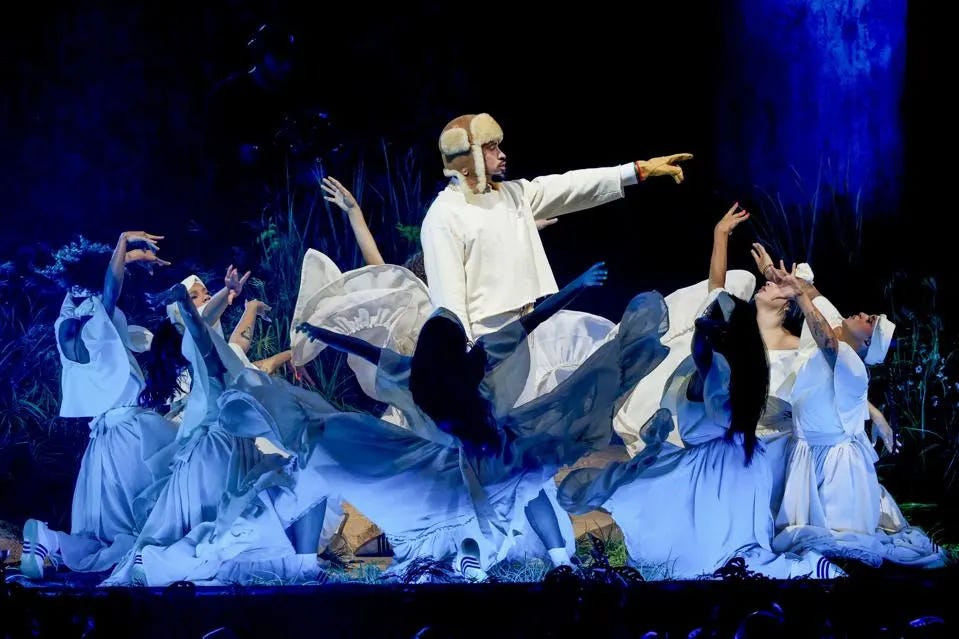
But Bad Bunny can encourage that global interest and investment in Puerto Rico because he is already famous. He has a massive platform to highlight not only Puerto Rican culture but also the struggles of its people. El Apagón (translation: The Power Outage) from his 2022 album Un Verano Sin Ti has a 22 minute long music video/documentary detailing poor infrastructure investment and economic opportunity in Puerto Rico. Most places outside major hubs do not have, and will likely never have, a native son with the platform to do that.
The ones who’d be most likely to do so leave for elsewhere, a process known as “human capital flight” or “brain drain.” This process occurs both within countries and between countries, with more and more people moving to fewer urban areas. And honestly, it’s often a rational process for the individuals involved. The high school valedictorian of a two-stoplight town in Iowa leaving for college and then taking a job in Chicago after graduation. The fully trained surgeon from India or Nigeria moving to the US after securing a family medicine residency in Nebraska.
No one should stop them from pursuing those opportunities, but without investment in their homes, many feel they have no choice but to move away6. Some, but not all, would prefer to stay and implement ground up ideas to improve their homes, if given the opportunities.
If you don’t have your own Bad Bunny to drive economic growth, then who should invest in these peripheral locations?
That’s the challenge. It often doesn’t make traditional business sense for anyone to do so.
Haiti, like Puerto Rico, has poor energy infrastructure because it’s 1) a poor country, with 2) recurrent gang violence, and 3) worsening natural disaster exposure. Likewise, the poorest school districts will often tax themselves at a higher property tax rate (noted below as the “average local revenue effort rate”) in an attempt to provide their kids with better schools. But even at higher self-imposed tax rates, they cannot match the opportunities of kids in already wealthy districts.
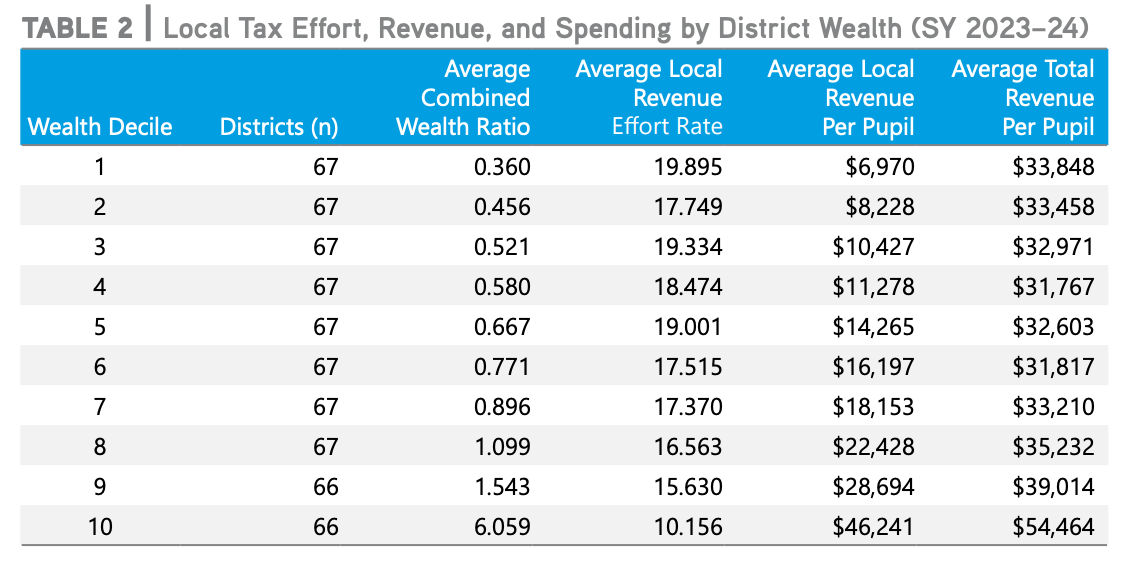
So, these peripheral places cannot save themselves. They need a deus ex machina type savior.
Within the US, that may mean the federal government engaging in place-based economic development (which has a history of mixed results) and continuing economic development funding for other countries, essentially redistributing resources from the “haves” to the “have nots.” But that feels appropriate for a MPP students and political strategists to discuss, not those in an MBA program.
How about private capital? Solid investment opportunities for venture capital and other early investors exist in places outside of Silicon Valley, NYC7, Boston, Beijing, and Shanghai (which together account for over half of VC funding). These sources of capital should evaluate deals on their own merits. “The Bad Bunny equivalent of 2050 may come from St. Louis, MO or from Lagos, Nigeria” is not (and should not be) an investment criteria on a shark’s checklist.
But the evidence suggests investing outside of the usual main hubs can be beneficial. An NBER white paper found VC firms based in major hubs performed best, but the reason for the top performers “arises from outsized performance outside of the venture capital firms' office locations, including in peripheral locations.” A more recent study, published in 2024, explored this further in the Chinese VC ecosystem. Chinese VC firms had similar success with out-of-hub investments but were also more conservative in investing in geographically distant ventures, using more stages of financing due to limitations in direct supervision, resulting in higher performance.
When a VC firm invests outside of its home country, its chances of a successful exit are highest when partnered with a domestic VC firm. While the larger, international (relative to the entrepreneur receiving investment) firm has capital and expertise, it lacks the local know-how and diligence capabilities of the domestic VC firm. Together, they are able to identify and execute more successful investments. Additionally, the domestic firms subsequently generate higher returns on future, non-syndicated investments, likely due to organization learning from the international VC firms, improving opportunities in their home countries via improved investments even after initial overseas investment.
And that brings us back to the importance of maintaining a diverse set of culturally generative ecosystems and of allowing them to authentically interact with one another.
Will exciting and innovative music, movies, books, and food cure cancer? No. But life would be incredibly dull without them. Plus, cultural expression allows us to share our stories, to process who we are individually within larger societies, both past and present.
And how we do that changes over time as the world around us changes. Not all Gen Z culture makes sense to me, a late-middle-of-the-pack Millennial, much less to my Baby Boomer parents.
And that’s ok. We keep renewing our culture by sharing and adding bits.
Not all presently existing culturally generative ecosystems will survive, just as most former species are now extinct. But a world with 50% of those currently present will offer more opportunity and promise than a world with only 10% of those cultures currently present.
But as important as that fight is, is it the job of any individual manager or analyst to save culture? No. For those in any for-profit firm, their job is to play by the rules of the game, whatever they may be, to maximize their firm’s long term value.
This is ultimately a misalignment of incentives: individuals following their own incentives leads us to a world we would not independently choose.
We should make the sensible investments outside hubs when possible (and take the time to look for them because it’s the financially smart thing to do). We should remove unnecessary barriers making those investments more difficult. We should pass public policies that preserve some economic capacity markets otherwise wouldn’t. But even with all of these, we’re unlikely to sustain many culturally generative places.
Clustering offers benefits now. The cultures we lose represent options on an unknowable future. We can count the investment returns and productivity gains from concentration. We cannot count the song unwritten, the flavors never combined, or the cultural phenomena lost because too many of its would-be creators left Lithuania a generation earlier.
That asymmetry makes the outcome fairly predictable. We already do and will continue to choose economic concentration and thus lose more cultural diversity along the way. Perhaps that trade appears economically rational in the moment, but we’ll never truly know because we can’t know what it fully costs us.
We must fight for 50% survival, not 10%. We must find a way to align individual and worldwide incentives. A culturally vibrant future depends on it.
Fun family lore: Grandma Pat always claimed to be “as old as the year” and said she was born on Easter Sunday in 1900. But! The church with her baptismal record burned down, so no one knew for sure the year of her birth. When she passed away in the late 1980s, my grandma wanted to get her tombstone right and thus went to the library only to discover her birthdate fell on Easter Sunday in 1899, not 1900.
Shakira had already released the Spanish language album Dónde Están los Ladrones? in 1998, having recorded it at the Miami studio belonging to Gloria and Emilio Estefan. (Gloria Estefan, the Cuban-American singer from Miami who performed in both the Super Bowl XXVI and Super Bowl XXXIII shows.)
I’d be remiss to not mention the 1958 recording of La Bamba by Ritchie Valens, the only Spanish language song on Rolling Stone’s list “The 500 Greatest Songs of All Time” and the 1995 Bayside Boys Spanish/English remix of Macerena (originally a Spanish only song by Los del Río in 1993) as influential on the acceptance of Latin music in US pop culture.
A common theme here is a mainstream artist becomes a fan of a less known (within the mainstream) artist and promotes his or her cause. Justin Bieber helped spread Daddy Yankee and Despacito, but he first received an endorsement from the R&B artist Usher. Likewise, Will Smith promoted Enrique Iglesias, Gloria Estefan promoted Shakira, and Drake promotes Bad Bunny.
Funny how all the people mentioned kinda tie together, right?
I highly recommend the book Hollowing Out the Middle: The Rural Brain Drain and What it Means for America. After receiving funding from the MacArthur Foundation, a married pair of sociologists moved to Iowa to explore these themes further. As someone from such a town, the classifications they devised felt very accurate. I could match people from home to each.
None of this is to say major hubs do not develop their own cultures. They certainly do! But their greatest value prop is (and has been since ancient times) serving as places where people from many distinct cultures can travel (or move) to, mix, and share their unique backgrounds, allowing for new MAYA combinations to develop.